AI Visionaries Summit 2025: How Leaders Are Converting AI Potential Into Practical Power


For years, artificial intelligence occupied a familiar place in boardroom conversations: promising, experimental, and comfortably abstract. That distance is disappearing.
At the AI Visionaries Summit 2025 in Gurugram, an event in Magnivel International Group’s World Artificial Intelligence Summits series, the conversation took a decisive tone. AI is no longer theoretical. It is fully operational. Leaders are exploring how it is influencing enterprise decision cycles, infrastructure choices, and long-term strategy at present.
The event brought together founders, enterprise leaders, technologists, and policy thinkers. For a day of panels and presentations that reflected a common realization: AI has crossed a threshold.
Where AI moved from concept to capability
The one-day event carried an ambitious but pointed theme, “Empowering the Future with AI Insights.” What emerged was less a celebration of technology than a collective reckoning with its realities. The discussions that unfolded throughout the day reflected a more pragmatic reality: companies are under mounting pressure to justify their AI investments with measurable outcomes.
The event served as a platform for knowledge sharing. It focused on enterprise AI maturity, shifting conversations away from experimentation and toward scalable, efficient, and responsible deployments.
AI and high-performance computing (HPC): A tightly coupled future
The summit opened with a panel focused on the accelerating convergence of high-performance computing (HPC) and artificial intelligence.

Dr. Vijeta Sharma, an AI scientist specializing in HPC and AI at the Norwegian University of Science and Technology, described how Europe has moved toward treating AI and supercomputing as a single ecosystem. Norway, she said, is part of the EuroHPC Joint Undertaking, a pan-European initiative that provides shared access to advanced supercomputers.
Rather than operating in separate silos, AI workloads and HPC resources now work in tandem, supporting large-scale simulations, model training, and inference across multiple domains.
“AI is incomplete without HPC and HPC is incomplete without AI,” she said. “They are no longer separate technologies. They need to run in parallel across Europe, Norway, and other countries.”
That idea of intelligence embedded into infrastructure became a recurring theme. The implication was clear: future competitiveness will hinge not simply on models, but on the compute ecosystems that support them.
She emphasized that access to European supercomputers enables research teams to train, simulate, and optimize AI workloads at scale. Dr. Sharma further noted that inference-driven networks are gradually becoming AI-native, thereby improving system-wide efficiency.
Subscribe to our bi-weekly newsletter
Get the latest trends, insights, and strategies delivered straight to your inbox.
5G, 6G, and the rise of intelligent networks
That ecosystem-level thinking carried into a discussion on 5G Advanced and emerging 6G networks.
The conversation expanded from compute to connectivity. Sandeep Sharma, Vice President and Head of Emerging Technologies for Network Services at Tech Mahindra, outlined how advances in 5G Advanced and emerging 6G architectures will fundamentally alter where and how AI decisions are made.

Mr Sharma pointed to native sensing as one of the defining capabilities of future networks.
Unlike traditional telecommunications systems, sensing-enabled networks can perceive their surroundings, make decisions locally, and adapt dynamically in real time.
“Every network node can sense what it needs, when it needs it, and how much it needs,” Sharma said. “The network starts behaving like a living organism.”
Latency reductions will be a critical catalyst. While 4G networks operated at 30–40 milliseconds, 5G reduced this to single-digit milliseconds. 6G is expected to push latencies below one millisecond, fast enough to enable near-instantaneous decision-making.
Such speeds, Sharma argued, will unlock applications that extend well beyond consumer use cases. It’ll be benefiting manufacturing, logistics, finance, and critical infrastructure.
In this context, edge computing is no longer confined to data centers. A smartphone, smartwatch, or on-device processor can function as an intelligent edge node, depending on how computation is distributed.
“The edge is wherever decisions are made,” he said.
The next generation of networks, Sharma explained, will incorporate native sensing—the ability for network elements to perceive their environment. It’ll adapt in real time and distribute compute dynamically.
“Networks are no longer passive pipes,” Sharma said. “They are becoming systems that can sense, decide, and optimize on their own.”
He also urged enterprises to be realistic about compute choices. While frontier AI development depends on advanced GPUs and large-scale infrastructure, most organizations can achieve tangible value using smaller, domain-specific models, improving efficiency while reducing cost and hallucination risk.
Rethinking models, not just scale
While much of the global AI race has focused on larger and more complex models, speakers at the summit suggested the industry is quietly shifting in another direction.
Instead of defaulting to massive general-purpose models, organizations are increasingly adopting smaller, domain-specific models. It is often referred to as SLMs or tiny language models.
These approaches, Sharma noted, offer essential advantages: energy efficiency, lower cost, faster inference, and reduced hallucination.
“The bigger the model, the more it hallucinates when used for small tasks,” he said, cautioning against blind trust in outputs from systems trained on trillions of parameters.
For many enterprises, especially in developing markets, such pragmatism is essential. Despite growing interest, full-scale HPC adoption remains limited, Sharma estimated, underscoring the need for architectural choices grounded in economic reality rather than technological aspirations.
Minimizing time to insight with advanced AI inference
In a session focused on the practical bottlenecks of enterprise AI, Ananya Sundar, Associate Director at Neutrino Advisory, addressed what many organizations struggle with most: extracting clarity from overwhelming volumes of data.

Data, she observed, is abundant, but insight is not.
Organizations today collect information across platforms, operations, customers, and ecosystems. Without clean pipelines and intelligent inference, that data becomes noise rather than value.
“The current phase of AI is about turning complexity into clarity,” Sundar said. “The challenge is no longer access to information, it’s interpretation.”
Her remarks underscored the shift away from experimentation toward operational AI systems designed to deliver decision-ready insights in real time.
Enterprise AI: opportunity tempered by caution
A later panel examined the widening gap between AI leaders and laggards in the enterprise world.
Despite soaring investment and media attention, speakers noted that many organizations remain cautious. Concerns about data security, governance, and regulatory exposure have led some companies to restrict or outright ban the use of generative AI tools.
Deependra Chokkasamudra, business leader and mentor at Zvolv, framed AI adoption as an ongoing process rather than a finite transformation.
“This is not a 12-month project,” said Mr. Chokkasamudra, a business leader and mentor at Zvolv. “AI is an iterative process. You build, you adjust, and you evolve with regulations and reality.”

He urged companies to abandon the idea of fixed AI timelines. Organizations, he argued, must build AI ecosystems that evolve in tandem with regulatory changes, data maturity, and internal capabilities.
“You build based on today’s regulations,” he said. “And then you adapt.”
Other panelists echoed this sentiment, arguing that productivity gains from AI require more than tools; they require leadership that understands how technology reshapes roles, workflows, and accountability.
Emerging job functions, such as prompt engineers and AI explainability specialists, reflect the growing need for human oversight even as automation continues to increase.
Tushar Sharma, Founder, Neuroplex, and Andreas Schweizer, Managing Director (Digital Agencies Network), Germany, shared their insights on the day’s themes, reinforcing the urgency around scalable deployments and automation strategy.
AI in practice: Retail realities, customer expectations, and data flow
Practical constraints were highlighted by Sarat Buddhiraju, Chief Architect at BigBasket, who described how AI has already automated internal IT operations, such as user onboarding, role assignment, and permissions management.
“New user onboarding, creating email IDs, assigning roles, agentic assistants are now replacing those steps,” he said.

Customer-facing AI, however, presents a more formidable challenge.
“People expect sub-second latency on everything they do in an app,” Buddhiraju said. “When you use ChatGPT, you’re willing to wait. But on Amazon or BigBasket, you expect instant responses.”
That mismatch, he argued, forces companies to rethink customer experience—or integrate AI into broader platforms.
Consumers expect instantaneous responses in shopping environments, unlike conversational AI tools, where delays are tolerated. For agentic AI to succeed in retail, speakers suggested, either user expectations must shift, or AI must become deeply embedded into platforms consumers already trust.
AI, publishing, and the growing influence
Meanwhile, Nidhi Gulati, Country Communications Director at Springer Nature, highlighted the growing role of AI in academic publishing, an industry facing exploding data volumes, stricter compliance requirements, and mounting cost pressures.
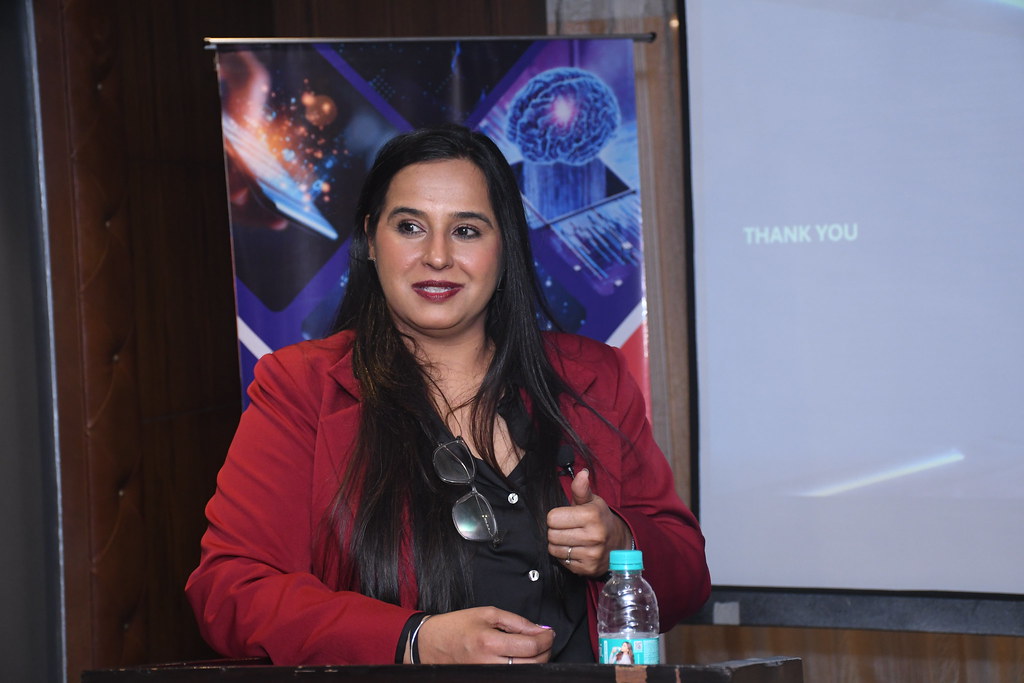
India, she noted, now ranks among the top global contributors of scholarly content and hosts some of the world’s largest editorial and operational hubs—placing it at the center of the global AI and data ecosystem.
What unites these use cases is not automation for its own sake, but the ability to turn noise into insight.
“There is more data than ever,” said Ananya Sundar, Associate Director of Client Services at Neutrino Advisory. “The real challenge is extracting clarity from it.”
Ethics, regulation, and responsibility
During the summit, in an interview with CTO magazine, Kirit Goyal, Director, Gazelle Information Technologies, shared perspectives on AI governance, challenging the feasibility of a single global regulatory framework.
“I don’t think a universal framework is practical,” Mr. Goyal said. “Even if one existed, it would be bypassed, much like we’ve seen with the internet.”
Instead, he emphasized shared accountability between AI providers and consumers, underscoring the need for ethical guardrails and informed skepticism.

“As consumers of AI, we have to be skeptical,” he further noted. “And as providers, we must build guardrails so outputs stay within legal and ethical boundaries.”
The C-suite steps in
Unlike traditional technology conferences dominated by developers and vendors, the AI Visionaries Summit drew a distinctly executive audience. C-suite leaders, chief executives, operations heads, strategy leads, and data officers engaged in candid exchanges about the organizational challenges of AI transformation.
Repeatedly, speakers emphasized that AI success hinges less on models and more on alignment. Deploying intelligent systems across enterprises requires coordination between business units, legal teams, compliance officers, and frontline user groups that historically operated in silos.
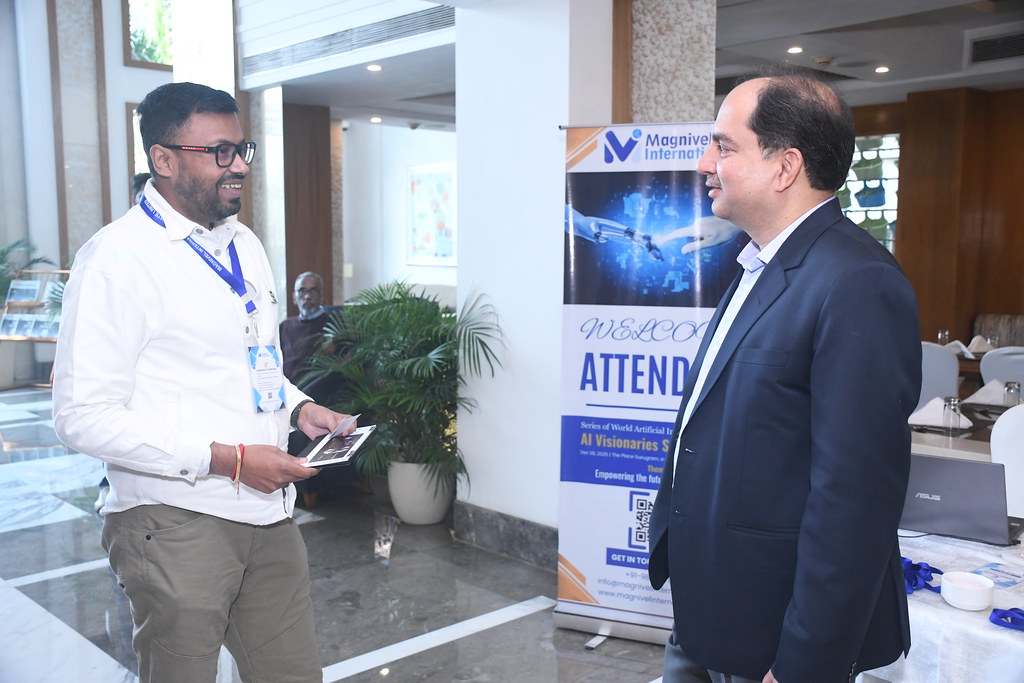
“AI is forcing organizations to confront how decisions are made,” noted one panelist. “When algorithms inform strategy, governance can’t be an afterthought.”
This broader mandate reflects a growing consensus: artificial intelligence is no longer a technical function; it is an enterprise capability.
Looking ahead
As the summit drew to a close, discussions converged on a sober conclusion. The next phase of AI will be led by discipline, clean data, thoughtful architecture, regulatory awareness, and continuous human judgment.
AI, speakers agreed, is not a destination but an evolving capability, one that rewards organizations willing to invest patiently rather than chase headlines.
In that sense, the AI Visionaries Summit 2025 offered less spectacle than substance, and perhaps that was its most meaningful signal.
In brief
The AI Visionaries Summit 2025 brought together industry leaders, researchers, and technology practitioners. The C-suite gathered to examine the evolution of AI from experimentation to enterprise infrastructure. Discussions spanned supercomputing, intelligent networks, governance, retail applications, publishing, and ethics. It highlights the importance of precision, adaptability, and responsibility in the next phase of AI adoption.
Curious where AI is headed next? Explore more expert perspectives.