
Is AI-native Architecture Shifting the Focus? Denis Romanovskiy, Chief AI Officer Weighs In

As artificial intelligence moves from experimentation to enterprise-wide integration, organizations are realizing that AI cannot simply live inside IT departments. It requires ownership, AI governance, literacy, and above all, vision.
At SOFTSWISS, a global iGaming technology company founded in 2009 and now serving over 1,000 brands with a team of more than 2,000 experts, that vision sits with Denis Romanovskiy.
The company made headlines in 2013 when it introduced the world’s first Bitcoin-optimized online casino solution, signaling its early adoption of transformative technologies. Today, from offices in Malta, Poland, and Georgia, SOFTSWISS is building the next layer of innovation, AI-native workflows embedded into its engineering and product ecosystems.
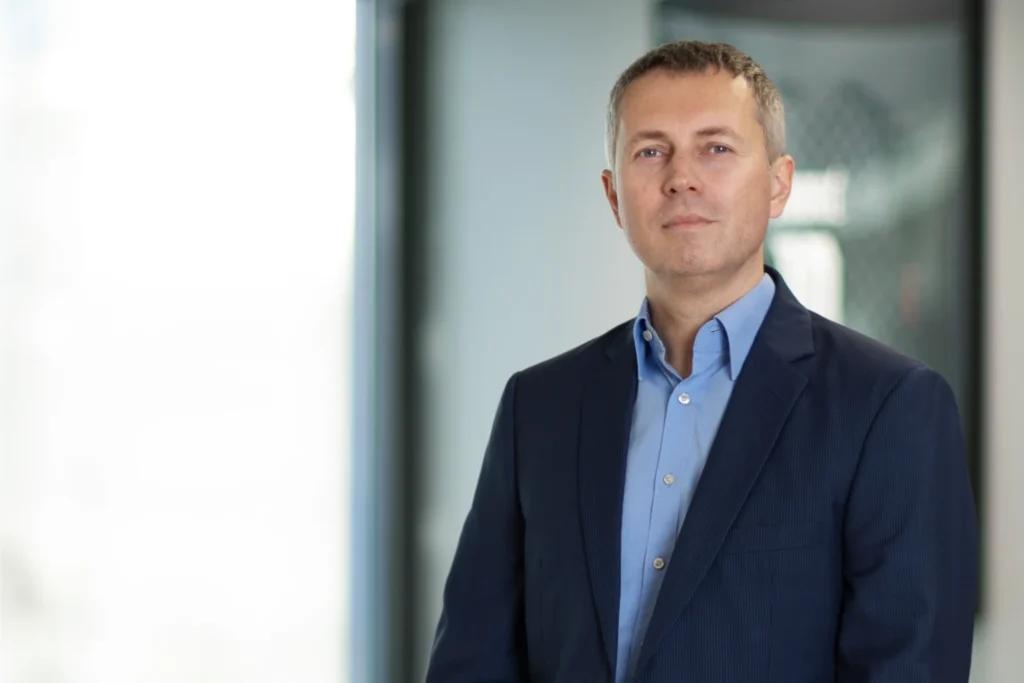
Denis Romanovskiy, Chief AI Officer, SOFTSWISS
Denis Romanovskiy is the Chief AI Officer (CAIO) at SOFTSWISS, a global technology company that provides software solutions for the iGaming industry. As Chief AI Officer, Denis is responsible for leading SOFTSWISS’s artificial intelligence strategy across the organization.
Rather than focusing only on deploying AI tools, his responsibility is to redesign how work is structured and executed using AI.
This includes shifting engineers’ roles from writing raw code toward designing instructions, defining constraints, and validating AI-generated outputs. In simple terms, Denis is shaping how SOFTSWISS becomes an AI-enabled organization.
In this extended conversation, Denis speaks with CTO magazine about his journey from developer to Chief AI Officer, the real risks of AI adoption, and accountability in AI-driven decision-making.
“I Started at 14”: A technologist’s origin story
Denis, before we go deep into AI strategy, I’d love to start with you. Tell us about your journey, your background, and what you’re doing today as Chief AI Officer.
Denis Romanovskiy: Let me try to keep it short, although my career is already quite long. I started at 14. There was a small company in Belarus where we tried to develop some of the first business applications for Windows. At that time, I was still in school.
We decided to build accounting software and succeeded. I contributed to different parts of the product, and since then, I’ve loved building software.
Over the years, I worked at multiple companies, including Wargaming, EPAM Systems, and later SOFTSWISS. I started as a software developer, then became a project manager, moved into director roles, and eventually spent about 5 years as Deputy CTO, working on iGaming products such as casino platforms and sportsbooks.
This year, we decided that SOFTSWISS needed someone who could drive AI capabilities forward. I felt ready for that challenge because I have always loved AI. It was my dream to focus on it fully, and now I do.

AI is moving incredibly fast right now. From where you sit, what worries you the most about how companies are adopting it?
Romanovskiy: The biggest risk, in my opinion, is not fully understanding the capabilities and limitations of AI systems.
Strong large language models have only been widely available for a couple of years. Do we truly understand how to work with them? How to govern them? How to build quality control systems around them? No, we don’t. We are all learning, large companies and small companies alike.
The risk is about misunderstanding. To succeed, you need to design properly.
AI changes execution. It makes work faster and cheaper. Previously, we spent a lot of time identifying the right problem, breaking it down into tasks, planning resources, and trying to optimize efficiency. The execution was long and expensive. After that, we tested and delivered.
With AI, execution can happen in minutes or hours. You can try something quickly, roll back, try something else, and iterate multiple times. You don’t need as much heavy upfront planning. You can experiment more. That changes how organizations work.
Is AI adoption quietly reshaping engineering teams and structures? You mentioned experimentation in engineering. What are you actually testing right now?
Romanovskiy:
Yes, it definitely is. Engineering is currently the area where most AI initiatives are happening. Developers started with code completion tools. Then they moved to more advanced assistants. Now we are asking bigger questions. Can we automate code review? We experimented with tools from Cursor, including BugBot. The results are very promising. We believe that 60-80% of code review work can be automated.
But that’s not all. Can we automate the entire development lifecycle? Can we automate requirement creation? Do we validate requirements automatically? Can we build test cases automatically?
Can we generate the exact feature? And then let people review and approve it before production?
This is our goal. We are experimenting with tools from Cursor and other cloud-based coding systems. We are integrating them into our workflows.
For example, if a task is small and simple, we can label it as an “AI task.” When the task reaches a specific workflow status, the AI triggers automatically and runs the process from task to task until completion. This is where we want to go.
That’s fascinating. If 60 to 80 percent of code review can be automated, where does that leave the developer? What actually changes for them?
Romanovskiy: Developers will definitely write less code. They will think more about how to write better instructions for AI agents.
For example, if we talk about code review, they will define the rules for the code review agent. These rules can apply to the entire project or be specific to a microservice. When we talk about generating code, developers will provide instructions about code style, preferred code patterns, architectural constraints, and limitations.
They will also include information about what is good and what is bad, what to avoid, and how the system should be tested. They will define what types of unit tests or integration tests should be built. So again, people will not focus on writing the exact code. They will focus on writing instructions.

Accountability in the Age of AI
Let’s consider a hypothetical scenario. If AI is influencing decision-making rather than just executing tasks, and something goes wrong, who is accountable? The technology? The business leader? The organization?
Romanovskiy:
That’s a very good question. Technology is now so complex that it can be difficult to understand where the failure happened. Was the model poorly trained? Did someone write the wrong prompt? Was incorrect data provided? Or did the leader fail to properly organize the process?
The answer is that everyone is responsible for their part. That’s why experts are still essential. You need smart people who understand what they are doing. Ultimately, the team leader holds primary responsibility because that person designs how the work is structured, where manual checks are placed, where automated checks exist, and what level of quality is acceptable.
At a high level, not much changes. But at a detailed level, there are many new considerations.
The focus shifts from execution to planning and verification. Verifying the final result becomes more important than manually producing it.
This impacts employees, team leads, and even C-level managers.
Will AI become a separate domain? Do you see AI eventually becoming its own function, almost separate from traditional IT?
Romanovskiy: It’s possible. It may evolve in two ways. One way is that AI becomes deeply embedded in every function and simply enhances existing teams. Another possibility is that AI systems become so complex, with multiple vendors, governance frameworks, tools, and processes, that they form their own domain, just like IT once did.
Right now, we are still in experimentation mode. Our goals are literacy, enablement, and experimentation. But experimentation must be tied to ROI. We need to define proper return systems and focus on initiatives with the highest impact.
That means working closely with business teams to define priorities and measurable outcomes. It’s a complex role because it requires cooperation across the entire organization.

Beyond automation: A shift in thinking
What becomes clear in speaking with Denis Romanovskiy is that AI at SOFTSWISS is not just about productivity gains. It is about redesigning how work is conceived, structured, and validated. From labeling “AI tasks” inside workflows to experimenting with automated development lifecycles, the company is not merely adopting AI tools; it is testing the boundaries of AI-native engineering.
And yet, the message is not one of replacement. It is one of the redistributions. Execution becomes faster. Planning becomes sharper. Verification becomes critical. And leadership becomes more accountable than ever.
Want to explore more on AI and leadership? Explore here.