

The AI Skills Gap Is Real — and CTOs Are on the Hook to Fix It

AI is no longer a bet for the future. For most large organizations, it’s already embedded in roadmaps, budgets, and boardroom conversations. And yet, as AI adoption accelerates, many enterprises are encountering a persistent issue: an AI skills gap, as they lack sufficient personnel with the necessary expertise to work effectively with AI.
By 2026, the AI skills gap will move from an HR concern to a direct threat to execution. It will slow down product launches, strain engineering teams, and weaken competitive advantage. For CTOs, this is no longer about hiring faster; it’s about redesigning the workforce itself.
This piece breaks down what the AI skills gap really looks like in 2026, why it’s widening, and how CTOs can build an AI-augmented workforce that scales with the technology rather than falling behind it.
The scope of the AI skills gap in 2026: How considerable is the shortfall?
On paper, AI adoption looks healthy. Most large enterprises have at least one AI initiative underway. In practice, capability is far thinner than it appears.
Recent McKinsey & Company research indicates that while nearly four out of five Fortune 500 companies are implementing AI projects, fewer than a third of employees possess sufficient AI literacy to contribute meaningfully. That mismatch becomes especially acute in roles that require hands-on expertise, such as generative AI design, model deployment, MLOps, and AI-driven decision support.
What’s often missing is a clear, quantified understanding of where the gaps actually are. Without a structured skills gap analysis, organizations tend to overestimate readiness. The result is familiar: delayed rollouts, overworked specialists, ballooning consulting spend, and “pilot purgatory” for promising AI initiatives.
Data from DataCamp’s State of Data & AI Literacy 2025 report highlights the same conclusion. Across leadership, engineering, and business teams, capability levels are far below what organizations will need within the next 18–24 months. Even well-funded companies are underprepared.
| Metric | Current State | 2026 Forecast | Implication |
| Employees with AI literacy | 28% | 60% required | Insufficient capacity to manage AI projects |
| AI-ready leadership | 15% | 50% required | Decision-making bottlenecks at senior levels |
| Generative AI competency | 10% | 45% required | Limited innovation in product and service development |
| Upskilled workforce | 25% | 70% required | Talent pipeline risks and delayed AI adoption |
Ignoring these signals doesn’t just slow innovation; it compounds risk.
Why the gap keeps getting worse: Three forces amplifying the AI skills gap
Three forces are simultaneously amplifying the AI skills shortage.
1. AI adoption has moved past experimentation
AI is no longer confined to labs or innovation teams. It’s being integrated into core platforms, business processes, and customer-facing products. That shift dramatically increases the number of people who need practical AI competence — not just specialists, but engineers, product managers, analysts, and leaders.
2. The technology itself won’t sit still
New stacks and practices, such as MLOps and AIOps, cloud-native AI architectures, and edge AI, are emerging faster than traditional training or university programs can keep up. Many organizations now require individuals who understand both the technical and ethical aspects of deploying AI at scale. That blend of skills remains rare.
3. The global talent market is tightening
Geopolitical tensions, visa constraints, and regional skill imbalances are shrinking the available pool of experienced AI talent. Competing purely through hiring is expensive, slow, and increasingly unreliable.
Together, these forces mean the gap isn’t going to close on its own.
Why is “AI-augmented workforce” the right goal?
The answer isn’t to turn everyone into a data scientist. The real opportunity lies in building an AI-augmented workforce, one where human expertise and AI capabilities are deliberately designed to complement each other.
That requires a more intentional approach than most enterprises are used to.
1. Role-based AI skill mapping
Not every role needs deep generative AI expertise. Some need fluency; others need hands-on capability. CTOs who treat AI skills as a flat requirement waste time and money.
Role-based skill mapping helps clarify:
- Which roles are critical to AI execution
- What level of AI competence does each role actually need
- Where gaps pose real delivery risk
This creates focus and makes upskilling efforts far more effective.
2. Bringing generative AI into everyday work
Generative AI can dramatically improve speed and creativity, but only when it’s embedded into workflows; when these tools sit on the sidelines or live in isolated teams, adoption stalls.
Organizations that deliberately spread generative AI capability across product, engineering, marketing, and operations see faster returns and far less resistance.
3. Treating upskilling as a continuous system, not a one-off initiative
One-time training programs don’t survive in an AI-first environment. Effective upskilling today is:
- Ongoing and modular
- Closely tied to specific roles
- Measured by impact, not attendance
Done well, this doesn’t just build skills; it improves retention by giving people confidence that they can grow alongside the technology.
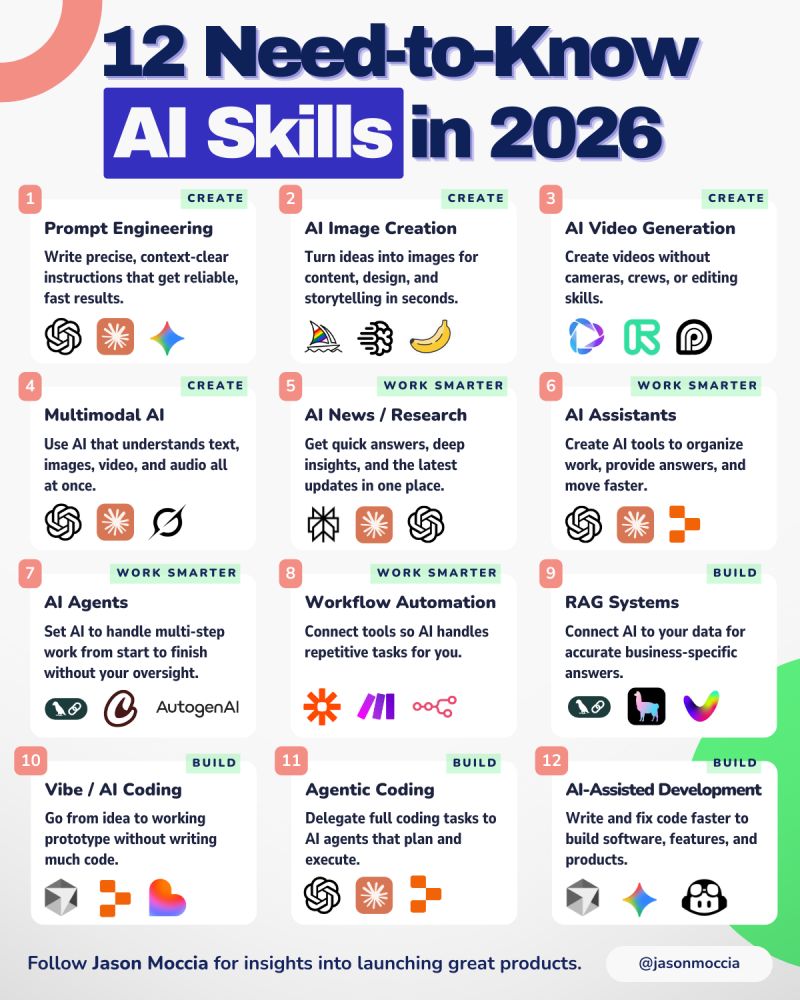
Jason Moccia from OneSpring shared in one of his LinkedIn posts:
4. Continuous measurement and feedback
Tracking progress in closing the AI skills gap is essential. Key metrics include:
- AI competency progression across roles
- Adoption rates of AI tools and platforms
- Impact of AI on project delivery and innovation metrics
By continuously measuring outcomes, CTOs can recalibrate learning initiatives, identify emerging gaps, and ensure that upskilling efforts translate into business value.
The CTO’s role has fundamentally changed
In the AI era, CTOs are no longer just technology leaders. They are workforce architects.
That means:
- Setting a clear AI talent agenda tied to strategy
- Prioritizing reskilling where possible over constant hiring
- Using external partners strategically, without creating dependency
- Building a culture where AI augments people instead of threatening them
Organizations that get this right move faster with fewer surprises. Also, a skills gap analysis should be executed as a rigorous, repeatable process. It isn’t complicated, but it does need discipline:
- Map current roles and capabilities
- Forecast AI skill demand 12–24 months out
- Flag gaps that directly affect delivery
- Design targeted, role-specific learning
- Measure impact and iterate
This transforms workforce planning into a repeatable capability, rather than a reactive exercise.
Girish Redekar, CEO & Co-Founder, Sprinto, quoted on LinkedIn:
There’s a popular take that AI is going to “level the playing field.” That it’s going to make the average employee faster, better, more productive. And while that’s true to some extent, here’s what I’m seeing more clearly with each passing month: AI is not flattening the curve, it’s widening it. The people who are truly skilled, masters of their craft in product, engineering, support, marketing, sales are pulling further ahead, They’re the ones not using AI as a shortcut, but as a force multiplier. They know how to delegate to it, when to override it, and where to push the edge of what’s possible. And the delta between what they can produce and what everyone else can is only growing. The best engineers or marketers that are being created aren’t just 10x anymore. They’re operating like teams of 10. AI is not make everyone better, it’s making great people exponentially better. Which also means: If you want to stay relevant, as an individual, or as a company, the bar is rising. Quietly, and fast.
Using AI to close the AI skills gap
Ironically, AI itself can help fix the problem.
Modern skill mapping platforms can analyze performance data, learning activity, and role requirements to recommend personalized development paths and predict readiness for AI-enabled work.
When used effectively, this significantly shortens time-to-value and reduces wasted training expenditures.
By leveraging AI to guide skill development, CTOs can optimize talent distribution, minimize training waste, and accelerate the time-to-value of AI initiatives.
The AI talent gap strategy is time-sensitive. Organizations that delay will face higher costs, reduced innovation capacity, and slower delivery. Conversely, CTOs who act now can accelerate digital transformation initiatives. Additionally, it helps reduce dependency on external contractors by reskilling existing talent and building resilient teams that can adapt to evolving AI technologies.
In brief
The AI skills gap isn’t a distant risk; it is a present reality. For CTOs, the imperative is clear: invest in structured workforce planning, integrate AI into talent development, and adopt a continuous measurement approach. The organizations that succeed will not merely survive the AI revolution; they will lead it. re, delivering less, and constantly playing catch-up.
In 2026, the winners won’t be the organizations with the most AI tools, but the ones with teams that know how to use them.