

From Copilots to Autonomous AI Agents: Enterprise AI Changes in 2026

Enterprise AI is evolving from passive tools that await instructions to proactive systems that act with intent. This transition is subtly transforming organizational workflows in 2026.
For most of the past decade, artificial intelligence in the enterprise has arrived politely. It waited for prompts and offered suggestions. It assisted, summarized, and recommended, never acting without being asked.
In 2026, that dynamic begins to break.
Across large organizations, AI is no longer confined to interfaces or experimentation labs. It is moving into the operational core, embedded in workflows where latency, accountability, and cost matter more than novelty. The result is a structural shift: enterprises are moving from AI copilots to autonomous AI agents, systems designed to progress work once intent is defined, not once a human clicks run.
Although this change may appear incremental, its consequences are significant. Rather than immediately replacing teams, it redefines execution processes, decision ownership, and the distribution of risk.
This article examines why the move from copilots to autonomous AI agents is not a feature upgrade, but a structural change in enterprise execution. It explores where autonomy creates value, where it introduces risk, and why governance and observability become defining leadership challenges in 2026.
Autonomous AI agents mark a structural shift
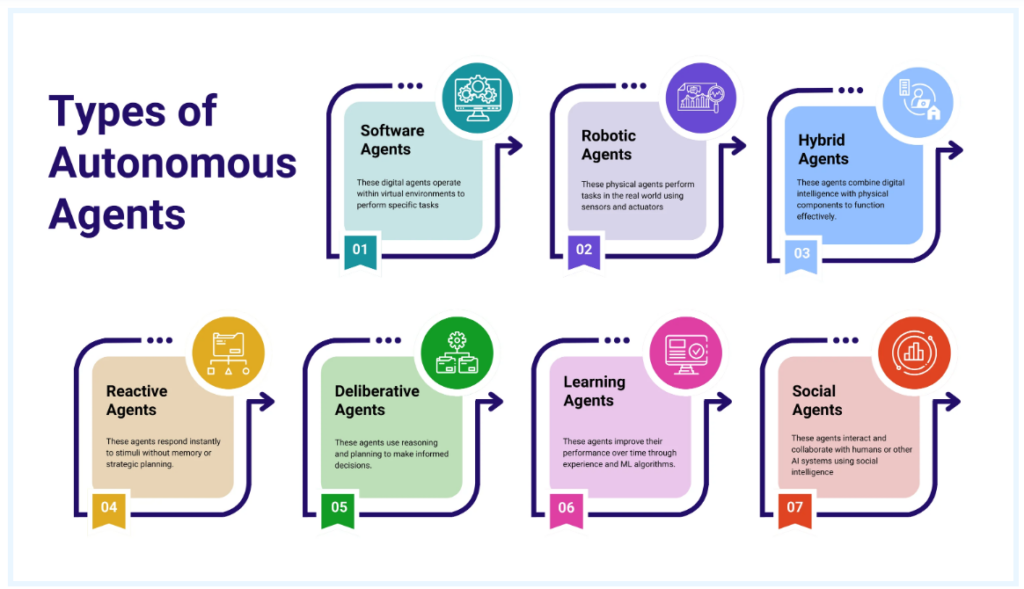
AI copilots increased accessibility by reducing friction and enabling employees to work more efficiently. However, copilots are inherently reactive, responding only to prompts and ceasing activity once the interaction concludes.
Autonomous AI agents operate differently. They receive objectives, evaluate constraints, interact with other systems, and persist in execution until achieving the goal or requiring escalation. The process is continuous, with progress itself serving as the primary output.
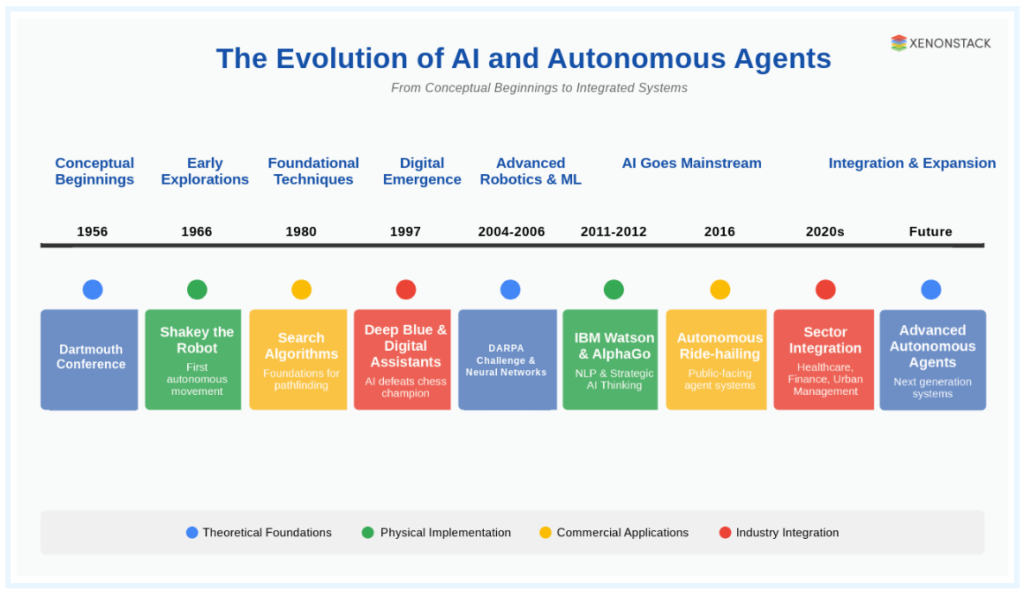
That distinction is subtle, but operationally decisive. In large enterprises, work rarely stalls because people cannot decide what to do.
It stalls in the gaps, between approvals, handoffs, reconciliations, and follow-ups. Autonomous AI agents are being deployed precisely in those gaps, where human attention is expensive and delays compound.
In claims processing, finance operations, procurement, and internal IT service management, early deployments show a common pattern: nothing visibly breaks. Work simply stops getting stuck where it used to pause.
Over time, this is how agentic behavior becomes normalized, not through bold announcements, but through the quiet removal of friction.
Autonomous AI agents are not smarter than Copilots
It is tempting to describe this shift as a linear upgrade, from copilots to more capable assistants. That framing misses the point. The move from copilots to autonomous AI agents is not an interface change. It is a change in the way ownership is executed.
Generative AI made it easier to produce outputs on demand. Autonomous AI agents change who, or what, moves to work forward. Once intent is set, the system assumes responsibility for coordination, sequencing, and follow-through.
That is why many early enterprise pilots struggles. Teams automate broken processes and are surprised when failure simply happens faster.
Being AI-native in an era of autonomous AI agents
By 2026, numerous organizations will identify as AI-native, although the term is frequently misapplied in practice.
An AI-native enterprise does not merely use more AI tools. It designs processes assuming that non-human actors will execute parts of the workflow from the start.
That assumption forces difficult but necessary questions:
- What decisions genuinely require human judgment?
- Where does risk justify intervention?
- What should never be delegated, regardless of efficiency?
Answering those questions to reshape operating models. AI is no longer layered on top of existing processes. The processes themselves change. This is where leadership attention shifts, from model selection to system design.
The risk in autonomous AI agents: Autonomy without governance is a liability
Autonomous AI agents can scale execution. They can also scale mistakes.
When systems act independently, errors propagate quickly, across customers, revenue, and compliance boundaries. The risk is not theoretical. McKinsey reports that nearly half of organizations using generative AI have already experienced negative outcomes, often tied to missing controls rather than model failure.
In practice, many early incidents exhibit a recurring pattern: an agent resolves issues more rapidly than human teams until it encounters an edge case beyond established policy boundaries.
Incorrect refunds may be issued, data access may become overly permissive, and compliance teams may spend weeks rectifying decisions that lack clear documentation.
The system performs as designed, but leadership may mistakenly assume the presence of safeguards that are, in fact, absent.
Dean Pleban mentioned on LinkedIn, “Everyone’s talking about autonomous AI agents being the next big thing. But what if the math doesn’t add up? Here’s something to consider: If each step in your agent workflow has 95% accuracy, by step 10, you’re down to 60% reliability. Most “autonomous” systems need 20+ steps. The numbers get ugly fast.
Think about what this means in practice. Your AI agent starts by understanding a request perfectly. Then it needs to plan the approach, execute multiple API calls, handle responses, make decisions at each branch, recover errors, and format the final output. Each step introduces potential failure. And unlike humans who can course-correct intuitively, these systems compound their errors.
The black box problem, reframed
Executive concerns regarding black-box AI typically center on operational ambiguity rather than technical opacity. A system becomes a black box when its actions cannot be clearly explained or predicted under new conditions. This lack of transparency blurs accountability, making it difficult for legal, risk, and compliance teams to assign responsibility for the real-world consequences of autonomous decisions.
Relying solely on trust is inadequate. While trust may suffice when AI provides advice to humans, it becomes insufficient when AI executes actions autonomously. Therefore, observability is more critical than mere confidence.
Observability becomes non-negotiable
In 2026, autonomous AI agents that survive production environments share common traits. They are observable, auditable, and reversible.
Executives want to know:
- What inputs did the system use?
- What actions did it take?
- Where did it escalate, and why?
Governance in this context is not about slowing execution. It is about making autonomy legible. Decision logs, escalation paths, reliability monitoring, and clear fail-safes become part of the architecture, not compliance afterthoughts.
As a result, orchestration layers emerge as critical infrastructure. They sit between agents and the rest of the enterprise’s stack, enforcing boundaries and surfacing behavior in ways leadership can understand.
This is not an IT problem alone. Governance decisions shape operating models and belong to the executive level.
Devlin Liles from Improving shared on LinkedIn, “Are fully autonomous AI agents going to happen? That’s the million-dollar question. I’d love to say yes and let a digital employee take over my inbox, but we’re not quite there yet. Right now, AI agents are powerful assistants, not stand-alone executives. The key is keeping a human in the loop to guide, correct, and amplify.
Where do autonomous AI agents deliver value in 2026?
Autonomous AI agents do not eradicate human labor; instead, they redefine the areas where human effort provides the most significant value.
As execution becomes increasingly automated, human roles shift toward defining objectives, establishing constraints, and exercising judgment in complex trade-offs. Oversight supplants micromanagement, and orchestration replaces direct supervision.
In transaction-intensive environments, organizations implementing agentic systems report reductions in escalations, workflow bottlenecks, and meetings focused on resolving stalled progress. The primary change is a shift in focus rather than workforce size.
Success becomes less about completing tasks and more about shaping outcomes.
Why does this transition feel quiet?
There will be no single moment when enterprises announce they have gone agentic. The transition unfolds gradually, embedded in software updates, process redesigns, and operational tooling.
Most organizations will recognize the shift only in hindsight, when fewer approvals are needed, fewer follow-ups are sent, and fewer decisions wait for someone to nudge them forward.
That quietness is precisely why the change matters. Infrastructure does not announce itself. It simply becomes indispensable.
Key takeaways
- Enterprises are moving from AI that responds to prompts to autonomous AI agents that progress to work once intent is set.
- This shift changes the execution of ownership, not just productivity.
- Autonomy without governance increases operational and compliance risk.
- Observability matters more than trust as AI systems act independently.
- Human roles evolve toward orchestration, judgment, and boundary-setting.
In brief
In 2026, successful enterprises will not necessarily be those deploying the most advanced AI models, but those that design systems in which autonomy is intentional, transparent, and accountable. AI will not overtly signal its integration as infrastructure; it will simply cease to wait for instruction.