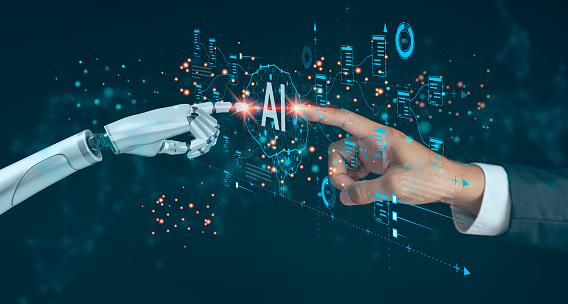

Human Judgment in AI Era: In-Demand Skill CTOs Are Prioritizing

In the age of AI, a critical corporate skill has emerged, one that is silently assumed, rarely named in job descriptions, almost never trained, and yet increasingly decisive. It is not another tech programming language, data architecture pattern, or AI framework. It is human judgment.
As systems act autonomously, generate decisions instantly, and operate across millions of users simultaneously, the cost of poor judgment compounds far faster than the cost of poor code. Errors no longer remain isolated; they propagate quickly across workflows, customers, and markets.
In such an environment, judgment is no longer a soft skill. It is a control mechanism. A governance lever. A strategic safeguard against scale without wisdom.
Likewise, recent analysis by McKinsey shows human skills like judgment remain central to the workforce.
Forward-looking CTOs recognize this shift. As a result, they are now rethinking how they hire and how they lead.
They are seeking technologists or executives who can connect AI innovation with sound judgment: employees who know when to question what AI produces, can explain complex decisions clearly, and can turn technical capability into sustainable business value.
The new rules of tech hiring
For organizations that are setting AI across all operational workflows, hiring professionals isn’t just about resumes anymore. What matters is how people can apply traits like curiosity and judgment to intelligent tools.
This shift is giving rise to new roles, such as ‘AI Translators’ or ‘Decision Intelligence Analysts’, who can help teams understand what AI insights/output mean and how to act on them.
Each of these roles connects human judgment with machine intelligence, showing how future jobs will blend technical skills with human insight.
What forward-thinking CTOs are looking for?
Progressive CTOs aren’t just asking, “Do you know AI?”. Instead, the questions are deeper, sharper, and far more revealing.
The evaluation criteria have shifted.
They are assessing decision sovereignty and have questions like: Can this candidate govern automation rather than merely operate it? Can they escalate uncertainty before it becomes failure? Can they defend a choice that contradicts a model’s recommendation and justify it coherently?
In other words, CTOs are now recruiting for calibrated scepticism, contextual reasoning, and accountable decision-making. They prefer individuals who can interrogate assumptions, question objectives embedded in systems, and anticipate second-order consequences before scale amplifies them.
What matters is not static expertise but the ability to learn, test, iterate, and recalibrate without ego or paralysis.
The shift is subtle, but powerful. In effect, hiring is moving from credential verification to cognitive evaluation. Judgment, once assumed, is becoming the ultimate strategic moat.
“Leaders shouldn’t be asking, ‘Which jobs will AI take?’ A better question is: If AI can do all of the tasks in my company, which employees will I still need—and why?” – says Wissam Raji (Associate Dean for Research and Innovation at Faculty of Arts and Sciences-AUB)
“The next-generation workforce will thrive at the intersection of human judgement and machine intelligence. And leaders must ensure that this workforce is prepared” – says Vijay Guntur, HCLTech CTO and Head of Ecosystems.
Why can this skill not be taught?
Human judgment is generally considered difficult or impossible to teach through traditional, or classroom-based instruction.
This skill sits at the intersection of critical thinking, tool awareness, ethical judgment, and communication clarity. It requires people to ask better questions, validate outputs, take ownership of decisions – even when tools assist.
It is less about knowing ‘what’ to do and more about discerning ‘when’, ‘why’, and ‘whether’ to do it.
That complexity makes judgment resistant to standardized training. It cannot be downloaded as content. It must be formed.
Organizations are facing a new paradox: Judgment without experience
Firstly, it’s important to recognize that judgment is a process – not a mystical quality that humans inherently possess. It is developed and refined over time through experiences and continued learning.
People refine judgment by making imperfect decisions, confronting trade-offs, and experiencing feedback loops. They learn through friction. Through accountability. Through seeing the downstream effects of their choices.
For organizations as a whole, this effect compounds.
Today, things are changing. AI is taking over many of the routine tasks that used to teach people how to make good decisions from scratch. As a result, fewer employees get the hands-on experience needed to build judgment. This means that important decision-making skills are now concentrated in a smaller group of senior leaders who learned them before AI became widespread. Over time, this could leave the next generation of leaders unprepared to handle new or uncertain situations.
There is also a subtler cultural effect. When people are removed from the type of ownership described here early in their careers, their learning naturally shifts toward how to manage upward, at the expense of learning how to decide.
Over time, organizations may find themselves rich in technical capability but thin in experiential wisdom – with a next generation less prepared to govern complexity under uncertainty
Executive action framework: Engineering human judgment in the AI enterprise
As AI accelerates execution, leaders must ensure that judgment capacity scales alongside it. The goal is not to slow automation, but to prevent cognitive erosion while systems advance.
Here’s a structured, actionable way to think about it:
Design for development, not just efficiency
Leaders can audit workflows where AI has replaced formative tasks. They can reintroduce structured ‘manual-first’ exercises in early-career roles so that employees learn to reason before they validate machine output.
Efficiency should not eliminate apprenticeship.
Pair AI with human oversight
Even if AI gives recommendations, a real person should always own the final decision. Make it clear who is accountable. When ownership is explicit, oversight strengthens, and automation becomes a tool for support rather than a substitute for judgment.
Review decisions, not just results
Instead of only asking “Did we hit the target?”, also ask “How did we make the decision?”
Discuss what assumptions were made on what basis. This builds stronger thinking over time.
Model judgment at the leadership level
Senior leaders who have deep experience should openly explain how they think through tough decisions. Younger employees need to see not just the final answer, but the reasoning behind it.
In short, the real solution is not to reduce AI usage. It is to engineer judgment development in parallel with the expansion of automation.
The real competitive advantage going forward
Technology will continue to evolve. Tools will get faster. Interfaces will get simpler.
But what will set leaders apart is how wisely they use those tools. The organizations that grow stronger over time will be the ones that protect and develop human judgment, even as they automate more work.
That blend of judgment and adaptability is the new competitive advantage. The future won’t just reward the most skilled team, but those who can turn intelligence – human or artificial into real-world value.
Because AI can help make decisions faster.
But only people can make them wiser.
In brief
In the age of AI, technical skills alone are no longer enough. Those who invest in developing human judgment through experience, reflection, and responsible decision-making will be able to navigate uncertainty, make wiser choices, and turn AI’s power into lasting value. Judgment remains the human advantage machines cannot replicate.