

What Meta Learned From Putting a Price on Cloud Carbon
For a long time, cloud teams measured success in familiar ways. If an application met its performance goals, stayed online, scaled smoothly, and didn’t exceed budget, it was considered a success. Carbon emissions were rarely discussed. When they were measured, the results often appeared months later in annual sustainability reports.
That approach is beginning to change.
Now, there’s a new question shaping infrastructure decisions: What is the environmental cost of running this workload? This matters because cloud infrastructure is now a major part of many tech companies’ operations. Every virtual machine, storage bucket, Kubernetes cluster, and AI workload uses electricity somewhere, even if engineers never see the actual servers.
As companies invest more in cloud computing, sustainability is increasingly appearing in engineering meetings, not just in ESG reports. Tech leaders are now expected to balance performance, cost, and environmental impact. That’s why internal carbon pricing is becoming a bigger topic in enterprise IT.
Meta’s recent experiment is a good example. Instead of measuring emissions after the fact, the company tried assigning a financial value to carbon to see if it would affect infrastructure decisions before they occurred. The results were surprising. It turned out that changing engineering behavior takes more than just putting a price on carbon.
What does internal Carbon Pricing actually mean?
Despite the name, internal carbon pricing isn’t a government tax or a carbon trading program. Think of it as another business metric.
Companies set an internal financial value for each metric ton of greenhouse gas emissions generated by their operations. This number is added to the list of things to consider when looking at tech projects, infrastructure investments, buying decisions, or cloud deployments. No money leaves the company. Instead, this helps teams see the environmental cost of their business choices.
Imagine two engineering teams deploying exactly the same application. Both deliver identical performance. Both remain within budget. From a traditional financial perspective, there may be little difference between them.
Now picture one application running in a cloud region that uses mostly renewable energy, while the other runs on a grid that produces more carbon. Internal carbon pricing makes this environmental difference clear by giving a financial value to the extra emissions.
The objective isn’t to punish engineering teams. Instead, it starts new conversations. When architects evaluate deployment options, carbon becomes another factor to consider alongside cost, reliability, scalability, and security. Increasingly appearing alongside discussions about cloud sustainability, cloud infrastructure optimization, and long-term digital transformation.
Wulf-Peter Schmidt from CBS University of Applied Sciences, shared internal carbon pricing is a very powerful tool for transformation. In many organisations, the most powerful sustainability lever is not a new technology, it’s a simple number. Markets only function when all costs are visible, and CO₂ is still treated as if it were free.
Why did Meta decide to experiment?
Meta’s pilot attracted considerable attention, partly because many reports claimed the company had adopted a $50-per-ton carbon price. The company’s own sustainability reporting tells a more careful story.
Meta’s 2025 Sustainability Report says the company started an Internal Carbon Pricing pilot in 2024 to see if adding carbon costs to business planning would affect decisions. Meta confirmed the pilot but didn’t share the exact price it used.
The often-mentioned fifty-dollar figure is just an industry reference, not an official number from Meta.
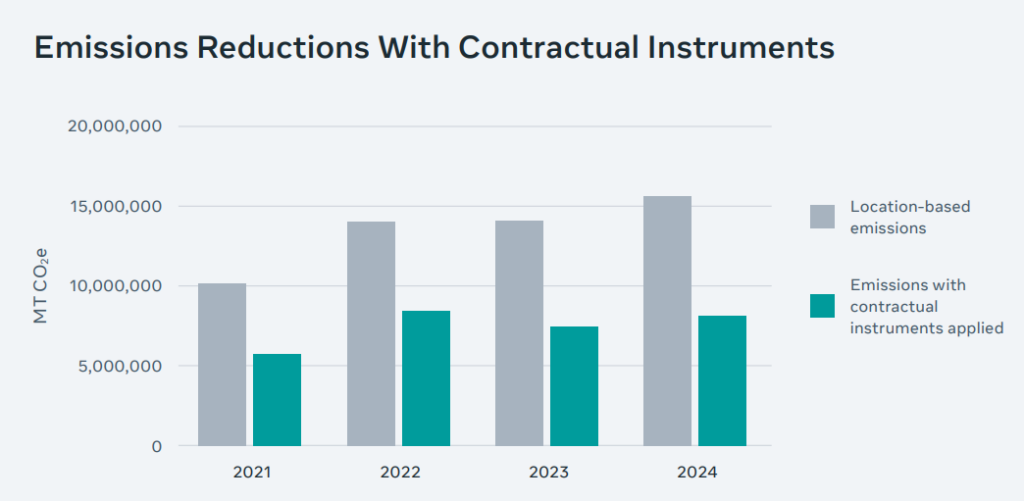
What makes the pilot interesting isn’t the number itself. It’s what happened afterward.
Meta found that carbon pricing alone had little effect on engineering decisions because its financial impact was small relative to total infrastructure spending. The experiment made carbon costs more visible, but it didn’t lead to big changes in how teams deployed systems. By 2025, Meta ended the pilot but continued pursuing other sustainability efforts.
For many CTOs, that’s the real takeaway. Just adding another metric doesn’t change what engineers focus on. Teams react when information is timely, measurable, and directly linked to their daily decisions.
What did Meta’s pilot actually reveal?
If you only looked at the headlines, it would be easy to assume Meta had found a new way to make engineers think about carbon. The reality was far less dramatic.
The company wanted to know whether assigning an internal cost to emissions would actually influence day-to-day engineering choices. In theory, the idea makes sense. If carbon carries a price, teams might naturally start treating emissions like any other operational expense.
That isn’t quite how it played out.
For an organization that invests billions of dollars in infrastructure each year, a relatively small internal carbon charge doesn’t carry much weight. Engineers still spend most of their time solving problems with immediate business consequences: keeping services available, reducing latency, planning capacity, controlling infrastructure costs, and ensuring customers aren’t affected by technical changes. Compared with those priorities, the carbon signal simply wasn’t strong enough to move the needle.
Meta’s own sustainability reporting reflects that conclusion. The pilot wasn’t presented as the foundation of the company’s climate strategy. Instead, it was one experiment among many. Alongside this, Meta continues to invest in renewable energy, expand AI-ready data centers, improve operational efficiency, and pursue its broader net-zero commitments.
That’s probably the more useful lesson for technology leaders.
Internal Carbon Pricing doesn’t fail because the concept is flawed. It struggles when carbon exists outside the tools that engineers already use. If emissions are buried in quarterly sustainability reports, they’re unlikely to influence infrastructure decisions. The picture changes when workload-level emissions, cloud carbon cost tracking, regional electricity data, and infrastructure costs appear together in the same dashboards.
At that point, carbon stops feeling like someone else’s metric and becomes another operational metric that engineers can use when making architectural decisions.
Why does carbon accounting come first?
One lesson from Meta’s experience is easy to overlook. Before an organization can assign a financial value to emissions, it has to know where those emissions actually come from. That is where carbon accounting enters the picture. Modern cloud environments create emissions through thousands of activities at once. Applications use computing power. Storage systems grow on their own. APIs talk to outside services. AI models handle huge datasets. You don’t see smoke, but all these activities use electricity from somewhere in the larger infrastructure.
Engineering teams need reliable information before they can compare deployment options or understand whether one architecture produces fewer emissions than another. This explains why many organizations now view carbon accounting less as a compliance exercise and more as operational intelligence.
Instead of producing sustainability reports just once a year, companies are now tracking emissions alongside infrastructure use, app performance, cloud costs, and efficiency. Carbon data is slowly turning into just another engineering metric, not just a report made long after deployment decisions.
Carbon accounting software is moving into engineering workflows
Manually tracking emissions worked when cloud environments were small. But this approach doesn’t work once organizations use multiple cloud providers, regions, suppliers, and thousands of apps.
This is where carbon accounting software becomes valuable. These platforms collect infrastructure telemetry, cloud consumption data, supplier information, and emissions factors automatically. Rather than relying on static spreadsheets, engineering teams receive a much clearer picture of how workloads contribute to the organization’s overall carbon footprint.
The practical benefit isn’t simply producing better sustainability reports. It changes how technology teams evaluate infrastructure.
A workload that appears inexpensive from a financial perspective may consume substantially more energy than expected. Another deployment might cost slightly more to operate but produce considerably fewer emissions because it’s operating in a cleaner region or using infrastructure more efficiently.
Without reliable carbon accounting software, those tradeoffs remain largely invisible. For organizations exploring internal carbon pricing, accurate emissions data is what makes the entire framework credible rather than theoretical.
How does internal carbon pricing fit into a multi-region cloud deployment?
Not every cloud region leaves the same environmental footprint.
That’s something more engineering teams are beginning to factor into deployment decisions. A few years ago, selecting a cloud region was largely about latency, availability, disaster recovery, or regulatory compliance. Those priorities haven’t changed, but another variable has been added to the list: carbon intensity.
The electricity powering one data center may come largely from renewable sources, while another region may still depend heavily on fossil fuels. The application doesn’t change, but the emissions associated with running it can. That’s one reason multi-region cloud deployment is taking on a new role.
Instead of distributing workloads only for resilience and performance, some organizations are also considering where they can lower emissions without affecting user experience. Not every workload can move freely. Customer-facing applications often need to stay close to users to meet latency requirements. But batch processing, analytics, AI model training, backups, and reporting jobs usually offer much greater flexibility. Running those workloads in lower-carbon regions can reduce emissions without changing how the application performs.
For engineering leaders, sustainability is gradually becoming another factor in infrastructure planning rather than an afterthought once systems are already deployed.
Jan-Willem Bode, from Puro.earth shared in one of the LinkedIn posts, Some thoughts on internal carbon pricing mechanisms. There are many theories and approaches to determine the right level of internal carbon prices for companies… a flat 25 Euro per tonne number, as that is what we can get approved by the C‑suite and we want to start somewhere.
Why Meta’s experiment matters beyond Meta?
It’s easy to look at Meta’s pilot and conclude that internal carbon pricing didn’t work. That misses the bigger story.
The pilot showed that assigning a financial value to carbon, by itself, isn’t enough to change engineering behavior. Infrastructure teams naturally prioritize reliability, customer experience, and operational budgets. If carbon data isn’t integrated into those workflows, it’s unlikely to influence decisions.
The experiment also highlighted another challenge. Carbon information has to be accurate, timely, and easy to understand. Engineers are unlikely to change deployment strategies based on annual sustainability reports. They need data while they’re designing systems, choosing cloud regions, or reviewing infrastructure changes.
That’s where better carbon accounting, workload-level reporting, and cloud carbon cost tracking become increasingly valuable. The lesson isn’t that internal carbon pricing has limited value.
It’s that pricing works best when it’s supported by high-quality operational data and engineering processes that make sustainability visible at the right moment.
What CTOs should take away?
For technology leaders, the most important takeaway has very little to do with the actual price assigned to carbon. The larger shift is cultural. Cloud infrastructure is no longer evaluated only through the lens of performance and cost.
Sustainability is gradually becoming another operational metric that engineering teams monitor alongside uptime, utilization, security, and cloud spending, Organizations don’t have to redesign their infrastructure overnight to benefit from this approach.
Many of the improvements already recommended for better cloud operations also support sustainability. Rightsizing workloads, modernizing applications, improving Kubernetes utilization, removing idle resources, and selecting infrastructure more carefully often reduce operating costs while lowering emissions at the same time.
Internal carbon pricing simply helps make those trade-offs easier to see. Whether organizations ultimately adopt carbon pricing or not, the direction of travel is becoming clear. Carbon data is moving closer to everyday engineering decisions instead of remaining isolated inside annual sustainability reports.
For CTOs planning long-term cloud strategies, that may prove to be the most significant change of all.
In brief
Internal carbon pricing is helping organizations rethink cloud infrastructure. Rather than viewing emissions as a reporting exercise, companies are beginning to evaluate carbon alongside cost, performance, and operational efficiency.
Meta’s pilot demonstrated that pricing carbon alone isn’t enough to change engineering behavior, but it also highlighted the growing importance of carbon accounting, carbon accounting software, Cloud Sustainability, Cloud Cost Optimization, and Cloud Infrastructure Optimization.
As cloud environments become more complex, engineering teams will increasingly rely on accurate operational data to balance financial performance with long-term sustainability goals.
FAQs:
Internal carbon pricing is a framework that assigns a financial value to greenhouse gas emissions generated by business activities. Organizations use it to consider environmental impact alongside infrastructure costs when making business and engineering decisions.
Meta launched a pilot to explore whether assigning a financial value to emissions would influence business and engineering decisions. The company later concluded that the financial signal alone wasn’t strong enough to significantly change operational behavior.
Carbon Accounting measures greenhouse gas emissions across business operations and cloud infrastructure. Without accurate emissions data, organizations cannot implement internal carbon pricing effectively.
Carbon accounting software gathers infrastructure, operational, and supplier data to calculate and report greenhouse gas emissions. It helps organizations monitor their carbon footprint more accurately and continuously.
Green Cloud Computing focuses on reducing the environmental impact of cloud infrastructure through efficient software design, better resource utilization, renewable energy adoption, and optimized infrastructure management.
Kubernetes Optimization reduces wasted computing resources by improving workload scheduling, rightsizing containers, and eliminating idle capacity. These improvements often lower both cloud costs and carbon emissions.
Different cloud regions rely on different electricity grids. Deploying suitable workloads in regions with lower-carbon energy sources can reduce emissions while maintaining application performance and availability.
No. Internal carbon pricing complements cloud cost optimization by adding environmental impact to existing financial and operational decision-making. Organizations increasingly evaluate both together when planning cloud infrastructure.