Watershed and Carbon Accounting Software in Enterprise Infrastructure
Carbon reporting used to be a year-end exercise. Sustainability teams used to collect invoices, utility bills, supplier data, and travel records, then spend weeks putting together a report. This process took a lot of time, but it was manageable when the rules were simpler.
That is no longer the reality. With Scope 3 disclosures growing and climate reporting now a key part of business strategy, companies are expected to track emissions as accurately as they do financial data. This change is reshaping carbon accounting software. Modern platforms are now integrated into the main business technology systems, linking data from finance, procurement, cloud services, and suppliers into one system that can be audited.
Watershed is one company leading this change, showing that carbon accounting is now as much about data engineering as it is about sustainability.
Carbon accounting isn’t a reporting problem anymore
The conversation around sustainability has changed. A few years ago, companies mostly focused on publishing yearly ESG reports and showing progress toward long-term climate goals. Now, the questions are more practical. Leaders want to know whether emissions data is accurate, whether supplier information is reliable, and whether every number can be traced back to its source.
Those questions have pushed carbon accounting software into the spotlight. Rather than being a separate reporting tool, these platforms now connect with finance, procurement, cloud, HR, travel, and supplier systems. The aim is not to build reports by hand anymore, but to create a steady flow of reliable environmental data that updates with the rest of the business.
That’s a significant shift. Large organizations create thousands of records every day. They get electricity bills from many countries, buy goods from hundreds of suppliers, and manage cloud workloads that are always changing. Employees travel, buildings use energy, and logistics partners move products around the world.
Each activity contributes to an organization’s emissions profile. Trying to pull all that information together by hand is no longer realistic.
Why spreadsheets reached their limits?
The problem isn’t that spreadsheets stopped working. They simply weren’t designed for the volume and complexity. Spreadsheets just were not built to handle the amount and complexity of today’s business data. From dozens of countries, supplier disclosures in multiple formats, cloud usage reports from several providers, and procurement data from different ERP systems. None of those sources follows exactly the same structure.
Even small inconsistencies create problems. Using different units, missing supplier details, duplicate records, or old emissions factors can all change the final results. Fixing these problems by hand often takes more time than doing the calculations.
As reporting requirements expand, organizations also need stronger evidence supporting every number they publish. Auditors increasingly ask where emissions figures originated, which emissions factors were applied, and whether the calculations can be reproduced. These new expectations have changed what carbon accounting software does. Instead of just swapping spreadsheets for a new tool, modern platforms now automate collecting, checking, and documenting data before any calculations start.
What Watershed built differently?
Watershed entered the market with a different perspective. Instead of seeing sustainability reporting as just an ESG task, the company treated it as a big data integration problem. Most companies already have the data they need to calculate emissions. The hard part is gathering it from many separate systems, fixing inconsistent records, using the right emissions factors, and keeping a full record of every step.
The platform links directly to finance, procurement, travel, utility, supplier, and cloud systems. Instead of making sustainability teams upload files by hand each time, information moves automatically as business happens. For customers, that changes the reporting experience completely.
Teams now spend less time dealing with spreadsheets and more time analyzing results, identifying high-emission areas, and collaborating with other departments to drive improvements. It also means reporting becomes continuous instead of seasonal. Companies do not have to wait until year-end to identify missing supplier details or incomplete utility data. They can spot problems early enough to fix them.
This ability is becoming increasingly valuable as sustainability reporting increasingly resembles financial reporting, where the quality of the data is just as important as the final numbers. Following an emissions record from source to A, a carbon number does not just show up in a report. Before it appears on a dashboard, it goes through several systems that collect, check, and standardize the data.
Take something as routine as an electricity bill. In many companies, someone used to download the invoice, type it into a spreadsheet, and match it with the right emissions factor by hand. This method worked, but it took a lot of time and often led to mistakes.
Modern carbon accounting software handles workflow very differently
Now, the invoice is brought in automatically from the source system. AI helps pull out details like energy use, billing dates, supplier info, and location, then turns the document into structured data. That information doesn’t move straight into the final report.
First, the data goes through checks to catch missing values, duplicate records, odd spikes in energy use, or things that do not match past activity. Instead of waiting for someone to find mistakes, the platform flags possible problems as the data moves through the system. Only then does the emissions calculation begin.
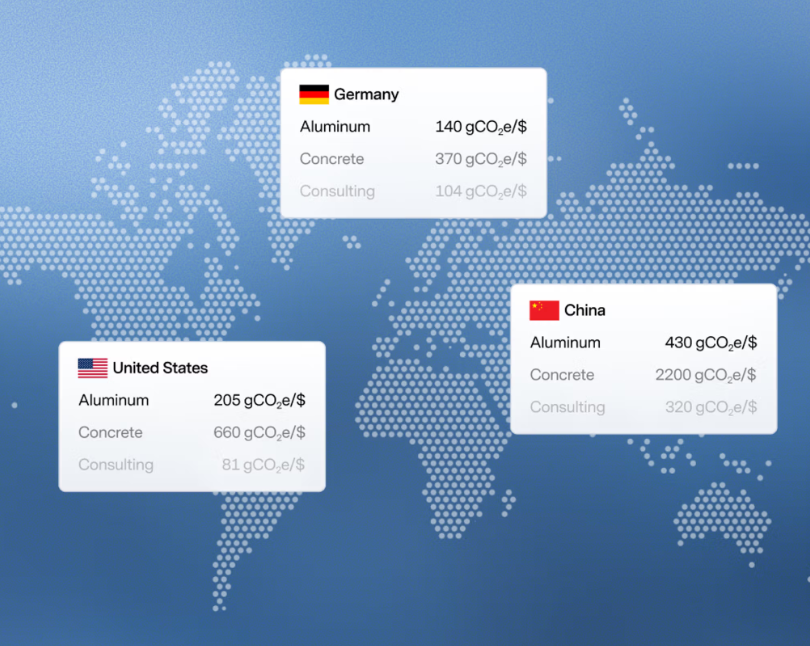
Watershed checks operational data against a library of over 500,000 emissions factors for about 148 countries and 400 industries. Picking the right factor is important because the same amount of electricity can lead to very different emissions depending on where and how it was produced.
After the calculation, every step can be traced. Companies can see where the data came from, which emissions factor was used, and how the final number was reached. That audit trail is becoming increasingly important as carbon reporting moves closer to financial reporting standards.
Behind the platform: What happens during processing?
Watershed’s platform uses both automation and human review, instead of depending only on AI. Every new dataset is checked before becoming part of the organization’s emissions inventory. At a high level, the workflow looks like this.
| Workflow | Process |
|---|---|
| Data collection | Information is imported from ERP systems, procurement platforms, utility providers, travel systems, cloud platforms, and supplier portals. |
| Data extraction | AI organizes invoices, bills, and operational records into structured datasets. |
| Validation | Automated quality checks identify missing information, duplicate entries, and unusual activity. |
| Emissions calculation | Data is matched against more than 500,000 emissions factors covering 148 countries and 400 industries. |
| Audit trail | Every calculation remains linked to its original source, supporting verification and external reporting. |
For sustainability teams, the main benefit is not just faster calculations; it is having confidence in the data itself. When leaders ask why emissions increased in a certain area, or auditors seek proof of a reported number, companies can answer without digging through many spreadsheets. This changed the conversation Most organizations can estimate emissions from their offices, company vehicles, and purchased electricity with reasonable accuracy.
Scope 3 is different
Scope 3 covers emissions from the whole value chain, including purchased goods, cloud services, employee travel, logistics, business partners, and suppliers. Most of this information is outside the company’s direct control, which makes it the hardest part of carbon reporting. That’s also why it often represents the largest share of total emissions.
Companies cannot just use their own data. They have to work with suppliers who collect environmental data in different ways, with different standards and experience. Some suppliers provide detailed emissions figures, while others offer only rough estimates. For big companies, getting consistent information from hundreds or thousands of suppliers quickly becomes one of the toughest challenges.
This is where carbon accounting software has shifted from being a reporting tool to becoming a platform for working together. This is why carbon accounting software has evolved from a reporting tool into a platform for updating and validating emissions data throughout the reporting cycle. Missing information is identified earlier, supplier engagement becomes more consistent, and reporting teams spend less time reconciling conflicting datasets. The result isn’t perfect data. It provides a clearer view of the biggest reporting gaps.
Integrations matter as much as calculations
Organizations rarely need another standalone application. They already manage finance through ERP systems, procurement through purchasing platforms, cloud infrastructure through hyperscale providers, and business intelligence through data warehouses.
The real challenge is linking all these systems together. That is why integration is now a key feature of modern carbon accounting software. Instead of exporting spreadsheets between departments, emissions information can move directly from operational systems into reporting workflows. Finance teams continue working inside their ERP platform. Procurement manages suppliers through existing purchasing tools. Sustainability teams receive updated information without repeatedly requesting manual exports.
For technology leaders, this shift changes the whole conversation. Choosing a carbon platform is no longer only about emissions calculations. It’s also about how well the software fits into the existing enterprise architecture, supports governance requirements, and reduces manual work across the business.
As porting needs keep changing, the software’s integration may become as important as the reporting features themselves. The market for carbon accounting software is growing fast, but it is not just sustainability teams driving this growth.
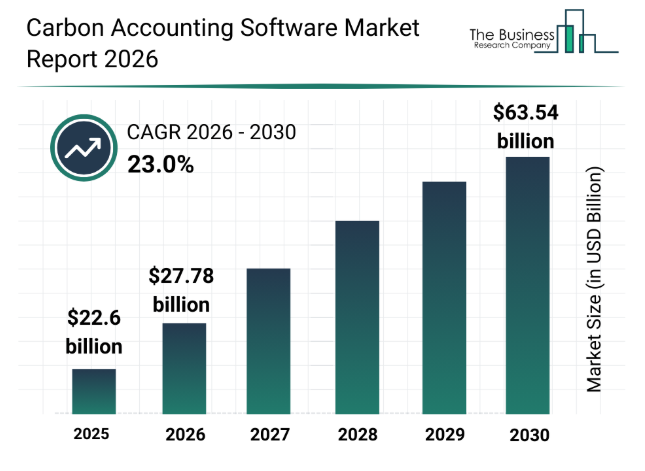

Finance leaders, procurement teams, CIOs, and boards are all paying closer attention as climate reporting becomes part of mainstream business operations. New disclosure requirements, investor expectations, and supply chain transparency are driving organizations to replace manual reporting with platforms capable of handling large volumes of operational data.
The software itself is changing, too. Older carbon reporting tools mostly just calculated emissions. Now, platforms are expected to automate data collection, connect to business systems, maintain audit trails, and support multiple reporting standards, all in one place.
Experts expect demand to keep growing as companies prepare for more complex reporting requirements across regions.
Comparing enterprise carbon accounting software capabilities
While vendors approach the market differently, most enterprise platforms are evaluated across similar capabilities.
| Function | Capabilities |
|---|---|
| ERP integration | Reduces manual imports by connecting directly with finance and procurement systems. |
| Supplier engagement | Simplifies collecting Scope 3 data from vendors across the supply chain. |
| Audit trail | Helps organizations explain where every emissions figure originated. |
| AI-assisted data processing | Speeds up data cleaning while reducing manual effort. |
| Reporting framework support | Supports disclosures such as GHG Protocol, CDP, CSRD, ISSB, and other reporting standards. |
| Dashboard and analytics | Gives business leaders visibility into emissions trends throughout the year. |
No single feature determines the best platform. For many companies, success depends more on how well the software fits their current processes than on how many dashboards it has.
What this means for CTOs
Carbon reporting is now becoming just another business data task. The same principles technology teams already apply to finance, cybersecurity, and operational analytics now apply to sustainability data as well.
- Reliable integrations matter.
- Data quality matters.
- Governance matters.
- Automation matters.
Companies that keep using separate spreadsheets may find it harder and harder to keep up with new reporting rules and rising expectations from investors, customers, and regulators. Technology leaders don’t necessarily need to become sustainability experts. But they do need to ensure the systems for carbon reporting can grow, remain secure, and produce information people can trust. This is now becoming an IT responsibility as much as a sustainability one.
In brief
For years, carbon reporting was mostly seen as a compliance task done once or twice a year. As companies gather emissions data from cloud providers, suppliers, finance, procurement, and global operations, carbon accounting software is turning into another business data platform. The companies getting the most out of these systems are not just using them for sustainability reports. They are using them to get better insights, work more closely with suppliers, and make environmental data part of daily business decisions. The bigger challenge is building a tech foundation that can handle carbon data with the same accuracy, transparency, and controls as financial data.
FAQs:
Carbon accounting software helps organizations collect, calculate, monitor, and report greenhouse gas emissions using operational data from finance systems, procurement platforms, utility providers, suppliers, and other business applications. It reduces manual reporting while improving data accuracy and auditability.
Spreadsheets become difficult to manage as organizations expand across multiple locations and suppliers. Modern platforms automate data collection, apply standardized emissions factors, maintain audit trails, and integrate directly with enterprise systems.
Scope 3 emissions come from activities outside a company’s direct operations, including purchased goods, suppliers, transportation, business travel, and cloud services. Collecting consistent information from external partners is often the biggest reporting challenge.
Watershed connects with ERP systems, procurement platforms, cloud providers, utility companies, travel platforms, and supplier networks. The platform automates data collection, validates incoming information, applies emissions factors, and maintains a complete audit trail.
ERP integration allows emissions data to flow directly from finance and procurement systems into reporting workflows. This reduces manual data entry, improves consistency, and helps sustainability teams work with more current information.
Yes. AI can organize invoices, structure operational data, identify missing information, and reduce manual processing. Human review and governance remain important, particularly for regulatory reporting and external audits.
Most enterprise carbon accounting software supports widely adopted frameworks such as the Greenhouse Gas Protocol, CDP, CSRD, ISSB, and other regional sustainability reporting requirements.
Technology leaders should evaluate integration capabilities, data quality controls, audit trails, supplier engagement features, reporting framework support, security, and scalability. A platform that fits naturally into the existing technology ecosystem is usually more valuable than one that simply produces attractive dashboards.