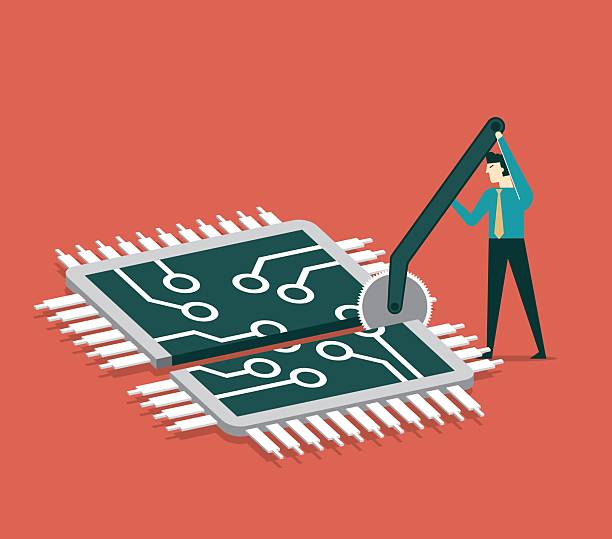

Is China Tech Decoupling Splitting the Digital World?

For nearly twenty years, technology leaders believed the world was becoming more connected. Cloud platforms expanded across the globe. Software vendors entered every major market. Hardware supply chains stretched over continents. The main idea was to build once and deploy everywhere.
Now, that belief seems much less certain.
Trade disputes and export restrictions were just the start. Now, choices about semiconductors, cloud infrastructure, AI, and data movement are shaped by geopolitics in ways few technology leaders saw coming ten years ago. For CTOs, China tech decoupling is no longer just a topic for policy experts. It now directly affects infrastructure planning, vendor selection, risk management, and long-term technology strategy.
The organizations adapting best see this as a lasting change in global technology, not just a short-term disruption.
When did China tech decoupling become a CTO problem?
Geopolitical issues once felt far removed from engineering teams. Technology leaders used to focus on performance, reliability, scalability, and cost. Government policy rarely affected architecture decisions in a significant way.
Keeping those worlds apart is now much harder.
Now, a new regulation can change where data is stored. Export restrictions can shape AI infrastructure plans. Policy decisions made far away can impact procurement, deployment, and product roadmaps.
In many companies, issues once handled only by legal teams are now discussed in architecture reviews. This shift shows just how much things have changed.
The chip restrictions changed everything
Semiconductors are the clearest example of how decoupling is impossible to ignore. For years, companies took access to more powerful computing for granted. They expected new processors to arrive, prices to drop, and innovation to keep advancing.
Recent export restrictions have challenged that belief. Advanced AI chips are now viewed as strategic assets instead of just commercial products. They are tied to national competitiveness, economic security, and technology leadership.
That shift has forced technology leaders to rethink long-term planning
A few years ago, infrastructure talks were mostly about performance and budgets. Now, they also cover supply chain resilience, vendor concentration, and future access to key computing resources.
Even companies with little connection to China have felt the impact. When access to advanced computing is uncertain, every AI strategy becomes more complicated.
| Traditional Approach | Emerging Reality |
|---|---|
| Global chip sourcing | Regional procurement strategies |
| Performance-first decisions | Risk-aware infrastructure planning |
| Stable supply assumptions | Supply chain diversification |
| Single vendor dependency | Multi-vendor resilience |
| Predictable compute access | Policy-driven uncertainty |
The takeaway is not that innovation is slowing down. The real lesson is that access can no longer be assumed.
Why has the cloud strategy suddenly become geopolitical?
While semiconductors get most of the attention, cloud infrastructure might end up being even more important. Many organizations used to choose cloud providers mainly based on technical and financial factors. Performance, scalability, reliability, and cost were the main drivers.
Now another consideration has entered the conversation. Control. As governments focus more on digital sovereignty, organizations now face new questions about where information is stored, who can access it, and which laws apply. These concerns are influencing cloud architecture decisions across industries.
Regional cloud infrastructure is becoming more important. Data localization requirements are becoming more common. Enterprises are increasingly evaluating whether critical workloads can operate independently across different jurisdictions.
Topics that once seemed like compliance issues are now part of architecture discussions. And architecture discussions increasingly involve business risk.
The rise of parallel technology stacks
Technology leaders generally prefer simplicity. Maintaining multiple versions of infrastructure, governance processes, and vendor ecosystems creates additional complexity. It increases operational overhead and often introduces new management challenges.
Yet many multinational organizations are moving in exactly that direction. The reason is straightforward.
One architecture may no longer meet every regulatory, operational, and geopolitical need. Because of this, some companies are creating parallel approaches for different regions. Cloud partnerships, AI deployment, and compliance processes can vary a lot depending on the market.
Five years ago, this kind of duplication might have seemed inefficient. Today, it is often seen as a smart move. In a fragmented environment, resilience often matters more than having a perfect design.
Can one global technology stack still survive?
Many CTOs now wonder if a single global technology stack still makes sense in a world shaped by export controls, sovereignty rules, and regional regulations.
The answer depends largely on the nature of the business and the markets it serves. For some organizations, a unified architecture is still possible. For others, keeping one stack across all regions is getting much harder as technology regulations grow apart.
This is one reason multicloud strategies have gained momentum. The goal is not just to avoid vendor lock-in. It is to keep flexibility.
Workload portability, regional deployment choices, and diverse infrastructure partnerships help organizations stay flexible as things change. This adaptability is becoming more valuable than ever.
What the most resilient CTOs are doing differently?
The best technology leaders are not trying to predict every policy change. Instead, they focus on reducing dependency and increasing their options. Rather than assuming things will stay the same, they plan for uncertainty.
| Strategic Priority | Key Question |
|---|---|
| Dependency Mapping | What breaks if a provider becomes unavailable? |
| Cloud Portability | How quickly can workloads move? |
| Data Governance | Which systems require regional control? |
| AI Infrastructure | How dependent are we on specific compute resources? |
| Business Continuity | Can operations continue during disruption? |
These questions are becoming standard components of technology planning. Not because disruption is guaranteed. But because being prepared is now a competitive advantage.
China tech decoupling is becoming an architecture challenge
The most important lesson from the great decoupling is not political. It is architectural. Technology leaders can no longer assume that infrastructure, cloud services, semiconductors, and AI resources will be equally available in every market.
The environment has become more fragmented, more dynamic, and more complex. This reality is making organizations rethink how they build resilience into their technology systems.
The companies navigating this transition most effectively are not necessarily the ones making the boldest predictions about geopolitics.
They are building architectures flexible enough to handle change when it comes. In a world full of uncertainty, adaptability might be the most important technology skill of all.
In brief
China tech decoupling has moved from being just a geopolitical headline to a real technology challenge for global organizations.
Export controls, cloud sovereignty rules, AI infrastructure limits, and regional compliance are changing how technology leaders think about architecture and risk. Instead of focusing only on efficiency, many organizations now put resilience, flexibility, and workload portability first. The time when one global technology stack could serve every market is ending.
The companies best prepared for the future will be those that design systems able to adapt to a more fragmented technology landscape.