


Sponsored Content
Are Small Language Models the Future of Enterprise AI?

The rise of artificial intelligence has come with some unexpected costs. For the past three years, many companies have focused on building bigger language models, thinking that more parameters would lead to better results. In reality, Small Language Models (SLMs) are now providing faster results, lower costs, and often better accuracy for about 70 percent…
Why Security Assumptions Can Be Riskier Than They Appear

Cyber risk management: This interview explains why security assumptions are no longer enough, how organizations can strengthen cyber resilience, and what leaders must do to prepare for prolonged cyber disruptions and AI-driven threats. For years, financial institutions treated cybersecurity primarily as a technology challenge – one centered on preventing breaches, meeting compliance requirements, and minimizing…
Is Enterprise AI Governance Ready for Global Rules?

For years, most discussions about artificial intelligence centered on its capabilities. Companies rushed to use generative AI, automate tasks, enhance customer experiences, and find new ways to be efficient. Governance was usually seen as a lower priority, left for legal and compliance teams to handle after products were built. That approach is becoming increasingly difficult…
Subscribe to our newsletter
The Biggest Gen AI Myths Enterprises Still Believe

Generative AI has quickly moved from experimentation to the enterprise agenda. Organizations are using it to accelerate software development, improve customer experiences, streamline operations, and uncover new growth opportunities. Yet, despite the momentum surrounding GenAI, many organizations are still hesitant to fully embrace it. In most cases, this reluctance stems from the widespread Gen AI…
How AI Meeting Assistants Are Evolving From Note-Takers to Teammates

Meeting Intelligence: From meeting summaries to enterprise intelligence, discover how AI meeting assistants are reshaping workplace productivity and decision-making in modern organizations. In today’s corporate environment, meetings remain at the center of decision-making, collaboration, and execution. Yet much of the data generated during those conversations is often lost, forgotten, or trapped in individual notes. AI…
Why Alignment Beats Control When Scaling Tech Organizations

Scaling technology organization is often viewed as a challenge of systems, processes, and operational maturity. Those elements matter, but they are not what determine whether an organization can scale effectively. As teams grow, complexity increases faster than documentation can keep pace. New situations emerge daily, priorities shift, and no playbook can anticipate every decision. Sustainable…
What It Takes to Operationalize AI in Real Estate

AI-powered real estate: This interview explains how AI in real estate is transforming decision-making, boosting productivity, and delivering greater value to clients. Real estate has long been a relationship-driven industry, built on expertise, market knowledge, and trusted human judgment. But that is beginning to change. As the industry becomes increasingly data-rich and complex, artificial intelligence…
How Explainable AI Helps Solve the Black Box AI Dilemma
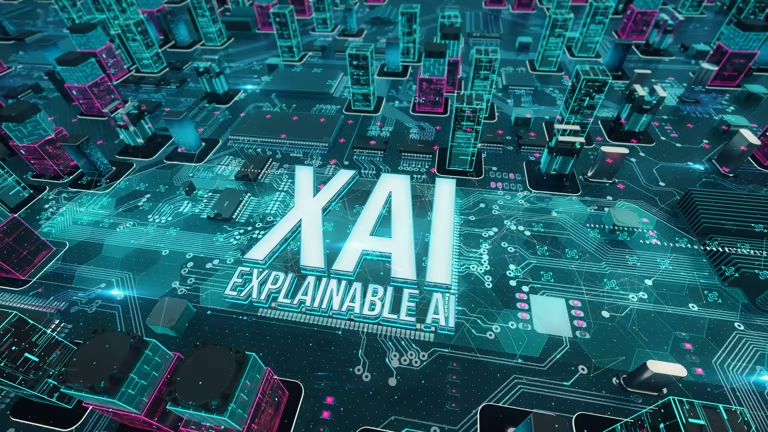
Artificial Intelligence (AI) is now deeply embedded in our everyday lives. It is automating business decisions, empowering recommendation engines, strengthening cybersecurity, enhancing healthcare diagnostics, and reshaping how industries operate. Yet as these systems grow more capable, a fundamental challenge has come into sharper focus: the more powerful AI becomes, the less transparency it offers. Many advanced…
Why Continuous Security Validation Is Becoming a Security Imperative

From Strategy to Execution: Technology strategies often look strong on paper but produce uneven results in practice. This series focuses on the gap between intent and execution, examining how organizations operationalize technology plans, manage dependencies, and adapt when initiatives do not progress as expected. Cybersecurity programs were built for a different era. Applications changed less…
The Operational Blueprint for an AI-Driven Logistics Enterprise

Logistics digital transformation: Discover how an AI-driven logistics enterprise is transforming operations through predictive intelligence, automation, and data-driven decision-making. The future of logistics will not be won by moving packages faster. It will be won by moving information better. As global supply chains become more interconnected, the real challenge is no longer transportation alone –…